
Understanding the Core Design for Safe and Lasting Fun
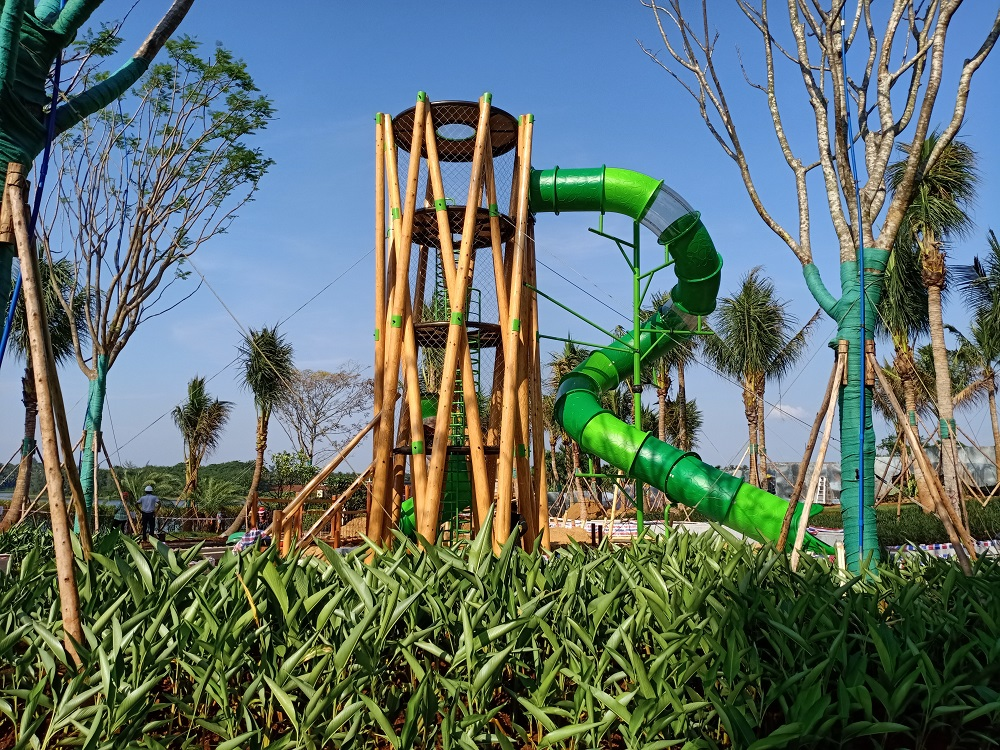
When planning a childrens slide, the journey begins long before the first piece of equipment is installed. It starts with understanding how design dictates safety and longevity. At Baiheplay, with over 20 years of manufacturing experience, we’ve learned that a slide is more than just a sloping surface; it's a carefully engineered system. A well-designed slide considers the child's entire journey—from the climb up to the landing. This means the entry platform must be spacious and inviting, the slide bed curvature must control speed without being jarring, and the exit region must allow for a smooth, safe stop. Our "Space Flying Saucer Series," for instance, integrates climbing frames and drums, showing how a childrens slide can be part of a larger, coordinated play event that exercises coordination and courage, all while adhering to strict safety logic from the very first sketch.
Adhering to International Safety Standards as a Design Baseline
The foundation of any trustworthy childrens slide is its compliance with rigorous global safety standards. Design and functionality are directly shaped by rules like ASTM F1487-21 in the US and EN 1176 in Europe. These aren't just bureaucratic hurdles; they are the blueprint for preventing injuries. They dictate critical design elements: the slope must be gentle enough (no steeper than 30 degrees), gaps must be carefully controlled (either smaller than 3.5 inches or larger than 9 inches to prevent head entrapment), and all corners must be rounded to prevent cuts. At Baiheplay, every product, from our "Bone Dinosaur Series" to our classic slides, is designed with these standards as the non-negotiable starting point. Our possession of certifications like the EU EN1176 and SGS on-site certification is proof that our design process is built on a foundation of authoritative safety science, ensuring the childrens slide is safe by design, not just by inspection.
Material Selection: The Intersection of Durability and Safety
A slide's design is only as good as the materials from which it's made. The choice of materials directly impacts both user safety and the product's lifespan. For a public childrens slide, exposed to sun, rain, and heavy use, material science is key. We utilize high-grade LLDPE (Linear Low-Density Polyethylene) with a high UV stabilizer rating. This is a design choice with a functional purpose: it prevents the plastic from becoming brittle and fading under intense sun, which can create sharp edges and weak points over time. Similarly, for structural integrity, we use 304 stainless steel and double-galvanized posts. This isn't just about rust prevention; it's about ensuring the frame of the childrens slide remains rock-solid, preventing hidden structural failures that could lead to collapses. This commitment to premium materials, even when faced with cheaper competition, is a core part of our design philosophy, ensuring long-term reliability.
Engineering for Impact: The Critical Role of Fall Surfacing
The design of a childrens slide extends beyond the equipment itself to include the surface around it. The "use zone" and the surfacing material are integral parts of the safety design. The critical fall height—the distance from the highest point a child can stand on the slide platform to the ground—dictates the type and depth of surfacing required. We advise on systems like dual-layer Poured-in-Place (PIP) rubber, which is engineered with a soft base layer for impact absorption and a durable top layer for accessibility. For example, a childrens slide with a 2.5-meter-high platform demands surfacing precisely calculated to reduce G-forces to safe levels, meeting the Head Injury Criterion (HIC). This data-backed approach to designing the entire play zone ensures that the ground is an active part of the safety system, not an afterthought.
Designing for All: Accessibility and Inclusive Play
Modern childrens slide design must embrace universal design principles. Functionality today means a slide that is usable and enjoyable for children of all abilities. This involves thoughtful design choices like creating "flush transitions" between the surrounding surface and the play equipment. By eliminating lips or edges, a child using a wheelchair or walker can glide smoothly onto the protective rubber surfacing. We've successfully integrated inclusive elements like wider platforms and gently sloping slides into our projects, such as the nature-inspired playground acclaimed for its accessible design. This approach ensures that the childrens slide is not a barrier, but a bridge, inviting everyone to participate in the joy of play, which enhances the social and developmental value of the playground.
Zoning and Flow: The Spatial Design of Safety
The functionality of a childrens slide is also deeply connected to its placement within the larger playground. Good spatial design prevents accidents by separating different age groups and activities. In our projects, we intentionally zone areas to avoid "age collisions." For instance, a high-energy zone with large childrens slide structures for older kids (5-12 years) is placed distinctly from a toddler zone with smaller slides (under 4 feet) and sensory play elements. We often use a "Central Observation Hub" for parents as a natural divider. This thoughtful layout ensures that a 10-year-old's fast-paced play doesn't inadvertently endanger a toddler's first wobbly steps near a smaller childrens slide, creating a safer environment for everyone through smart spatial design.
Proactive Maintenance: Preserving Design Integrity Over Time
A childrens slide's design for safety must include a plan for the future. The best initial design will fail without a proactive maintenance strategy. We provide clients with digital "Maintenance Audit Kits" that guide them through the process of checking bolt torque, inspecting for UV degradation, and ensuring surfacing depths remain adequate. This is about preserving the engineered safety features of the childrens slide. A loose fastener or a worn bearing, if caught early during a routine check, can prevent a much more serious failure. By planning for this lifecycle and empowering our clients with the knowledge to maintain it, we ensure that the childrens slide remains as safe and functional on day 3,000 as it was on day one, truly delivering on the promise of long-term, trustworthy design.
Table of Contents
- Understanding the Core Design for Safe and Lasting Fun
- Adhering to International Safety Standards as a Design Baseline
- Material Selection: The Intersection of Durability and Safety
- Engineering for Impact: The Critical Role of Fall Surfacing
- Designing for All: Accessibility and Inclusive Play
- Zoning and Flow: The Spatial Design of Safety
- Proactive Maintenance: Preserving Design Integrity Over Time


