
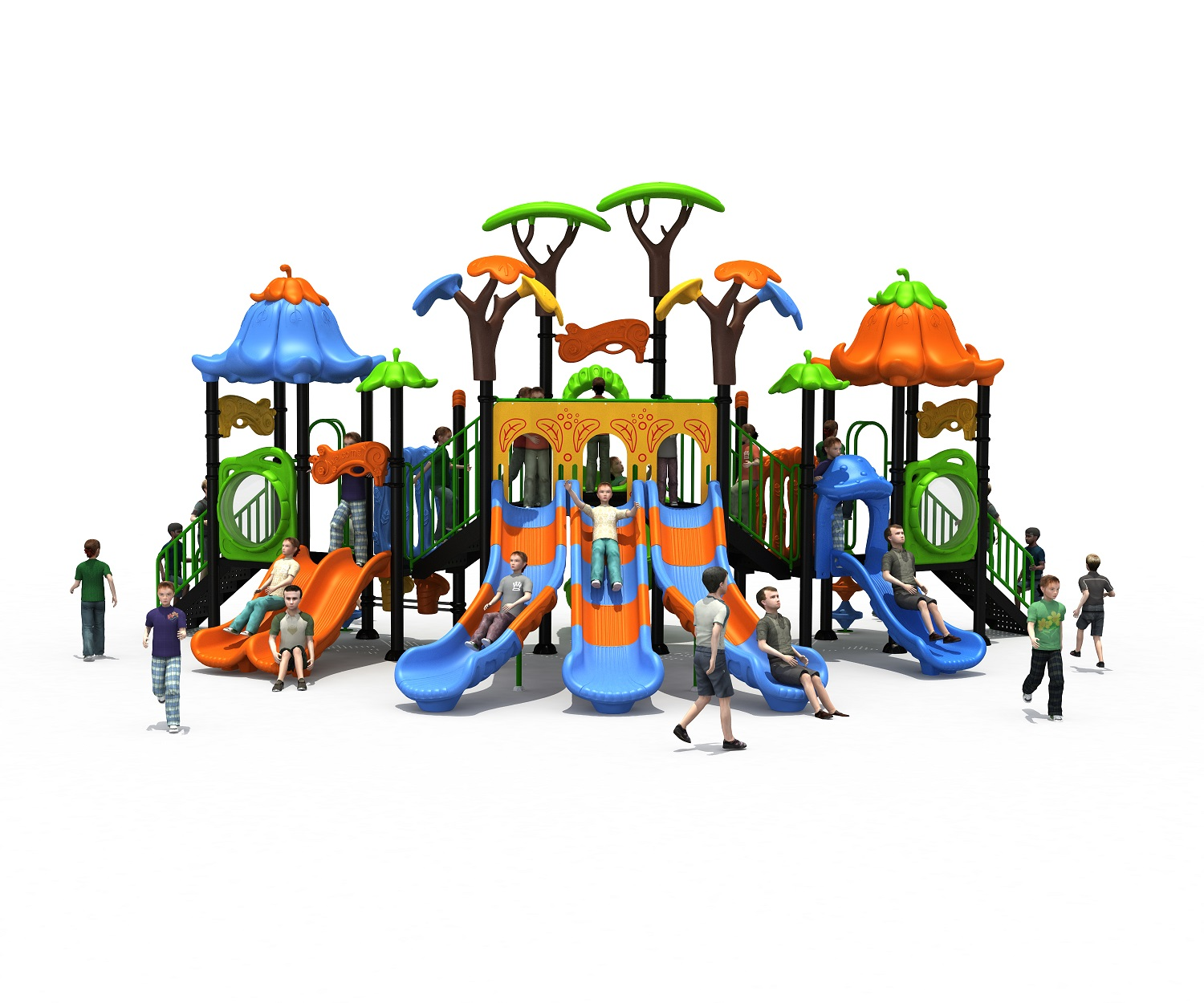
The Science of Stability: The Significance of Material Density in Kids Slides
Selecting kids slides for a commercial high-traffic setting is completely different from choosing kids slides for a private backyard space. Baihe Industrial Co., Ltd. is a manufacturer with 20 years of experience, and we know that the main cause of failure in public play areas is material fatigue. A solid kids slide should use Linear Low-Density Polyethylene (LLDPE), but the trade secret lies in the rotational molding methodology. We set the wall thickness for our slides to be between 8mm and 10mm. This allows the slides to endure thousands of users without any cracks developing and ensures that the children's slide remains in a stable condition. When purchasing slides, always consider the weight of the slide. A slide that is heavier is more dense, as it is constructed with more material, and therefore will have a superior life expectancy in harsh external conditions.
UV Resistance and Color Longevity: Shielding Your Investment from Sun Damage
Playground operators have expressed concern about the rapid fading and "chalking" effect on plastic components. Children's slides are exposed to strong UV radiation, which causes the plastic to start breaking down at the molecular level. In response to this challenge, Baihe Industrial Co., Ltd. incorporates professional anti-UV stabilizers (UV rating 8) during the manufacturing process. This is not a surface coating; it is a fundamental part of the children's slide construction. Investing in a children’s slide with integrated UV protection means the colors of the slide will remain visually appealing to children for the next 10 years. This helps to reduce the frequency of equipment replacements and sustains the visual appeal of your playground.
Structural Integrity: The Importance of Support Frames and Galvanized Steel
The skeleton of a slide supports all of its structural integrity. When talking about durability, the slide's supports must not rust. As a result of our extensive experience with projects in coastal areas, we only use hot-dip galvanized steel pipes for our slide supports. Our galvanization differs from typical painting in that it forms a metallurgical bond, protecting the steel from the outside as well as the inside. When it comes to installing a slide, the accuracy in the alignment of the joints is critical. We use robotic welding and aluminum alloy joints to eliminate gaps and sharp corners. This level of structural integrity ensures that our slides will not rattle or come loose, as is often seen with low-quality children's slides after a few months of use.
Designing for Safety: Impact Attenuation and Exit Zone Engineering
Within the scope of professional playground safety, the exit zone of the slide is the most scrutinized area. Durable children’s slides must be compliant with international safety standards, such as ASTM F1487 and EN 1176. Each of our exit sections has a predetermined radius of curvature so that the user transitions from a vertical position to a horizontal position, thus stopping safely. An exit section that is not sufficiently long or is not angled properly creates excessive stress on the bottom sub-structure of the slide, predisposing it to premature structural failure. At Baihe Industrial Co., Ltd., engineers determine the slide surface friction coefficient for every children’s slide and pair it with the appropriate safety surfacing, such as rubber mats or EPDM, to maintain the playground slide as a low-liability asset for school administrators and park managers.
Inclusion and Ergonomics: Optimizing the Inclusive Play Experience
When evaluating longevity, we also examine functional durability and consider how a children's slide design serves a multi-generational and diverse user population. The 2026 trend for the design and manufacture of children's slides is Universal Design. At Baihe Industrial Co., Ltd., our design philosophy includes sensory-rich wider slide beds and ergonomic side panels. When a children's slide is engineered for accessibility and comfort, the equipment increases play value and enjoyment for all users. Ergonomics and smart engineering increase structural life and reduce the chance of children suffering injuries from awkward landings or overuse of the slide.
Total Cost of Ownership: Why Industrial Quality is the Superior Option
Smart stakeholders use the Total Cost of Ownership (TCO) model to guide their purchasing decisions. A children's slide at a budget price point is often expected to last only 24 to 36 months and includes high hidden costs associated with regular maintenance or complete replacement. As a specialized children's slide manufacturer, we provide a Modular Maintenance System to our clients. This means that a damaged or vandalized section of a modular children’s slide can be replaced without disassembling the entire structure. By choosing industrial-grade children’s slides from Baihe Industrial Co., Ltd., customers secure a 10-year asset value, providing safe, maintenance-free play for children and peace of mind for stakeholders.
Table of Contents
- The Science of Stability: The Significance of Material Density in Kids Slides
- UV Resistance and Color Longevity: Shielding Your Investment from Sun Damage
- Structural Integrity: The Importance of Support Frames and Galvanized Steel
- Designing for Safety: Impact Attenuation and Exit Zone Engineering
- Inclusion and Ergonomics: Optimizing the Inclusive Play Experience
- Total Cost of Ownership: Why Industrial Quality is the Superior Option


